The Peptide Safety Guide
Before you start, know what’s in the vial.
If you’re here, you already do your homework. You don’t take things blindly. Not prescriptions. Not supplements. Peptides shouldn’t be different — but the industry around them is a wild west, and most of what’s online is written by people selling you something. This is the version that isn’t.
Start One — then listen to your body.
The mistake almost everyone makes is starting two or three peptides at once — because they’re excited, because they want results yesterday, because someone in a forum said the stack was magic.
Don’t. Start one. For at least two weeks. So when something shifts — your sleep, your skin, your energy, a weird breakout, a headache, a flat-out reaction — you actually know which one did it.
You can’t run a science experiment with seven variables. Your body talks. Listen to it before you add the next thing.
Two weeks per peptide before you add another. Keep a one-line note each day — sleep, mood, energy, skin, anything. By week two, you’ll know what’s working and what’s not. That data is yours. Nobody can sell it back to you.
What “Research Use Only” actually means.
Every peptide vial you’ll see is labeled “Research Use Only” or “Not for Human Consumption.” That label is confusing on purpose — or at least it feels that way the first time you see it.
Here’s the honest version: most therapeutic peptides aren’t FDA-approved as consumer products in the United States. They’re sold legally for research purposes. That doesn’t mean they’re illegal, dangerous, or fake. It means the regulatory framework hasn’t caught up — and the burden of due diligence shifts to you.
The label isn’t the red flag. The label is the system. The red flag is when the vendor has nothing else to show you besides that label.
What’s actually in the vial — and what isn’t a peptide at all.
Half the names you’ll see aren’t single peptides — they’re blends, several peptides in one vial. And the brand names tell you nothing. So here’s the honest breakdown of the ones everyone’s talking about.
They build on each other. Wolverine is the simplest — BPC-157 and TB-500, the two repair workhorses. GLOW adds GHK-Cu, the copper peptide, for skin and collagen. KLOW is GLOW plus one more: KPV, an anti-inflammatory that calms the gut and immune system. So KLOW isn’t its own mysterious thing — it’s GLOW with KPV on top.
And every one of them is injected — subcutaneously, into the fat, usually once a day. Not a cream, not a pill. If anyone tells you a healing blend is “just a topical,” they’re guessing. Know that before it’s in your hand.
Then there’s the stuff that rides along in the same conversation but isn’t a peptide at all. NMN, NMNH and NR are NAD+ precursors. Methylene blue is a mitochondrial compound. MK-677 is an oral growth-hormone secretagogue. People stack them right next to peptides, so they feel like the same family — but call them peptides out loud and the people who actually know will clock it. Use the right word. It’s part of knowing what you’re doing.
Never run two GLP-1s at once — semaglutide and tirzepatide together is double the risk, not double the result. And never mix raw peptides in one syringe yourself. Unless they were sold pre-blended like GLOW or KLOW, combining them can wreck both. When in doubt, separate shots.
The four questions every vendor should answer.
If a vendor can’t answer these — or won’t — close the tab.
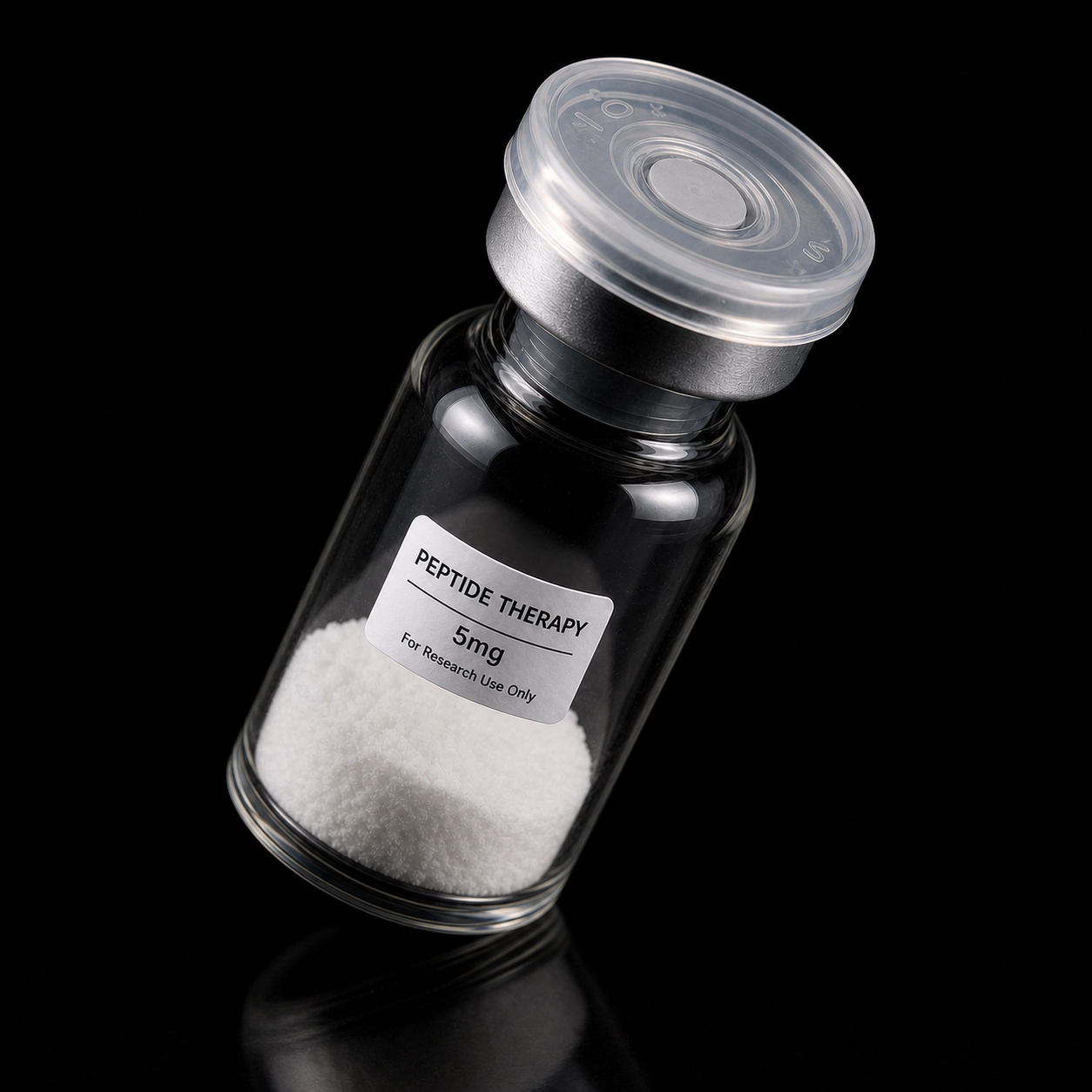
Sealed plastic flip-top = good. If it’s removed, broken, or visibly tampered with on arrival — document it, photograph it, and ask for a replacement.
Smooth metal ring with no rust, no dents, no signs of being pried. This is what seals the vial — it should never be tampered with.
Must include the peptide name, dosage in mg, and ideally a batch number. No name? No dosage? You can’t verify what’s in it.
Standard legal language for peptides in the US. The label’s presence is normal. The absence of any meaningful label is the red flag.
Pure white to off-white. A yellow tint, brown spots, or visible clumps means it’s contaminated, degraded, or wasn’t handled correctly. Don’t use it.
Clear glass with no particles, fibers, or debris floating inside. Anything visible in the vial that isn’t the powder = throw it out.
-
✦ ONEWhere’s the Certificate of Analysis? Every batch should have a COA — a third-party lab report verifying what’s actually in the vial. Purity. Identity. Contaminants. A good vendor publishes them publicly. A great one links the COA to the specific batch number printed on your vial. No COA, no sale.
-
✦ TWOWho did the testing? The COA should come from an independent third-party lab — not the vendor’s own in-house testing. Look for established names: Janoshik Analytical, JS Labs, ChemMaster, Eurofins. If the “test report” is on the vendor’s letterhead with no outside verification, it’s a self-report — which is worth roughly what self-reports are worth.
-
✦ THREEWhat’s the purity percentage? Pharmaceutical-grade peptides should be 98% pure or higher. 95% is the floor for anything reputable. Anything lower is filler, byproducts, or worse. If the number isn’t on the COA, the COA isn’t worth the PDF it’s printed on.
-
✦ FOURWhat’s NOT in the vial? The COA should explicitly test for heavy metals, endotoxins, and bacterial contamination. These are the things that hurt you. A clean purity number doesn’t mean the rest is safe — it just means the active ingredient is what they say it is. The negatives matter as much as the positives.
If you see any of this, close the tab.
None of these are subtle. None of them require expertise to spot. If your gut says something is off, your gut is usually right.
- ✦ No website — only Instagram or DMs. A real company has a real website with real policies, return information, and an “about us” page. A social-media-only vendor isn’t a company. It’s a stranger asking for your credit card.
- ✦ No Certificate of Analysis — just testimonials. “Our customers love it” is not data. Anyone can write a review. A COA is verifiable. Testimonials are not.
- ✦ Prices that look too good. Real peptides have a price floor. The raw synthesis, lab testing, and overhead all cost money. If a 5mg vial costs less than $20, something is wrong. Either it’s underdosed, contaminated, or fake.
- ✦ No contact information. No physical address. When something goes wrong — a damaged shipment, a billing question, an unexpected reaction — you need to be able to reach a human. A vendor with no traceable presence is a vendor who can disappear with your money.
- ✦ Urgency tactics — “last batch ever” messaging. Legitimate peptide companies are restocking, not running out. Manufactured scarcity is a sales script. If something is being sold to you with a countdown clock, walk away.
You’ve spent decades learning to spot the men who can’t be trusted. Use the same instinct here. The pattern is identical.
Less than 1% versus 90 to 100%. The number that changes everything.
When you swallow a peptide, your stomach acid breaks it down before it ever reaches your bloodstream. The bioavailability — the percentage that actually makes it to your cells — is less than 1%.
When you inject it subcutaneously? 90 to 100%. That gap is why almost every legitimate peptide protocol involves a needle — and why almost every “peptide capsule” sold online is wasting your money.

Swallowed: less than 1%. Stomach acid destroys peptides before they reach your bloodstream. Under the tongue: around 30% — works for smaller peptides like KPV. Bigger peptides need a different route.
Works locally on the skin. GHK-Cu serums act on collagen and elastin cells directly. No bloodstream needed. This is why the right peptide serum can do what a $300 cream can’t.
90 to 100% bioavailable, but rarely needed for peptides. Reserved for specific protocols. Most therapeutic peptides work better subcutaneously.
90 to 100%. The gold standard for therapeutic peptides. Insulin-gauge needle into the fat just under the skin. Almost painless. This is how BPC-157, MOTS-c, TB-500, and most peptides go in.
Also 90 to 100%. Rotate between belly and thigh to prevent tissue irritation. Your body tolerates the same routine longer when you don’t hit the same spot twice.
The four ways peptides get into your body — and when each one works.
-
✦ SUBCUTANEOUS INJECTIONThe gold standard for most peptides. A tiny insulin needle into the fat layer just under the skin — usually the belly, sometimes the thigh. Almost painless. Doesn’t draw blood. This is how BPC-157, MOTS-c, TB-500, semaglutide, and most therapeutic peptides are administered. If the needle scares you, the next section is for you.
-
✦ SUBLINGUAL (UNDER THE TONGUE)A real second-best for some peptides. Held under the tongue for 60 to 90 seconds, peptides can absorb through the mucous membrane directly into the bloodstream — bypassing the stomach. Bioavailability sits around 20 to 30%. Works reasonably well for smaller peptides like KPV and some GHK-Cu formulations. Doesn’t work for larger peptides — they’re too big to absorb that way.
-
✦ TOPICAL (ON THE SKIN)Local action, no systemic absorption. For peptides that work on the skin itself — GHK-Cu copper peptide is the famous example — topical is exactly right. The peptide doesn’t need to enter your bloodstream. It needs to reach the fibroblasts and collagen-producing cells in your skin. A well-formulated serum delivers it there. This is also why the $300 luxury cream and the $30 research-grade peptide can contain literally the same active molecule.
-
✦ ORAL (SWALLOWED CAPSULE)Almost always a waste of money. With rare exceptions (BPC-157 in some gut-specific formulations), swallowed peptide capsules are destroyed in the stomach before they can be absorbed. If a vendor is selling you a “peptide pill” for systemic effects — energy, longevity, hormones, healing — they’re selling you expensive amino acids. Read the label. If it’s a swallowed peptide and the bioavailability isn’t addressed honestly on the page, you have your answer.
Yes, you can do this.
If you’ve ever taken a flu shot, given yourself a fertility injection, helped a kid with an EpiPen, or done insulin — you’ve already done something harder than a peptide injection.
A subcutaneous peptide injection uses an insulin syringe — the smallest gauge needle made. Most women describe it as less of a pinch than a paper cut. You’re going into fat, not muscle. There’s no blood. Some women feel nothing at all.
If the idea of self-injection is what’s stopping you from trying a peptide that could actually help you — that’s a real obstacle, but it’s a solvable one. The first one is the hardest. By the fifth, you’ll wonder what you were afraid of.
Not for permission. For information.
Here’s the honest truth: most primary care doctors don’t know much about peptides. Some are openly hostile. A few are wonderful. The lottery you’re drawing is real, and we’re not going to pretend otherwise.
But there are situations where your doctor needs to be in the loop — not for permission, but because the data they hold matters to your decisions.
- ✦ If you’re on hormone replacement (HRT, T, thyroid). Some peptides interact with the endocrine system. Your doctor needs to know what else is on board — or your bloodwork will start telling a confusing story.
- ✦ If you have a cancer history. Some peptides stimulate growth factors. That’s a feature for tissue repair and a question mark for anyone with an oncology history. Ask before you start.
- ✦ If you have an autoimmune condition. Some peptides modulate immune response — KPV reduces it, thymosin peptides can boost it. The direction matters. Ask which one is which for your situation.
- ✦ If you take prescription medications. Interactions are real but mostly under-studied. Bring your medication list. A pharmacist consultation is often more useful than a doctor’s appointment for this question.
- ✦ Before and after — baseline bloodwork. A comprehensive panel before you start, a follow-up at three months. You don’t need permission to order this. You need a primary care visit and a check-the-boxes lab requisition. The data is yours.
Peptides die fast. Treat them right.
Once you’ve paid for a vial, the work of keeping it potent falls to you. Peptides are temperature-sensitive, light-sensitive, and once reconstituted, they have a clock running.
- ✦ Unmixed (lyophilized) vials live in the freezer. Sealed and dry, they’ll keep for two years or more. Light damages peptides — keep them in the original box.
- ✦ Reconstitution means mixing the vial with bacteriostatic water. That’s sterile water with 0.9% benzyl alcohol — the alcohol keeps it bacteria-free for up to 28 days. Regular saline doesn’t do that. The bacteriostatic water is sold separately. Buy it.
- ✦ Once mixed, the vial lives in the refrigerator. Not the freezer. Not the counter. The conservative guideline is 28 days — that’s how long the bacteriostatic water’s antibacterial effect reliably holds. Some peptides keep their potency longer than that when stored properly. Some lose strength faster. When in doubt — if it’s cloudy, discolored, or smells off — throw it out and start over.
- ✦ Pull doses with a fresh syringe each time. Reusing the syringe contaminates the vial. Insulin syringes are inexpensive. Buy a box.
You know how to start.
Here’s the harder question: what to start with. Each peptide is a different conversation with your body. The Peptide Calculator and the Featured Peptides library will show you what fits where you actually are.
Try every tool free for 7 days.
Drop your email and unlock all 12 tools — unlimited use, no credit card, no commitment. The peptide calculator that does the math. The supplement timing that actually matters. The interaction checker that catches what your pharmacy missed.
No spam · No hard sells · Cancel anytime