Your body already makes thousands of peptides naturally. They act like tiny messengers — telling your cells to heal faster, produce more collagen, burn fat, sleep deeper, or release growth hormone. As we age, our body produces fewer of these messengers. Peptide therapy is simply about giving your body back the signals it's lost.
So at what age do we really stop making these messengers?
We never fully stop — but the decline starts much earlier than most women realize.
Think of peptides as tiny messengers your body already makes — they tell your cells to heal faster, produce more collagen, sleep deeper, and recover better. Peptide therapy simply gives your body back the signals it has lost.
Each peptide has a different job, in a different place. These six are the ones women are asking about most — the conversation is bigger than this map, but this is a good place to start.
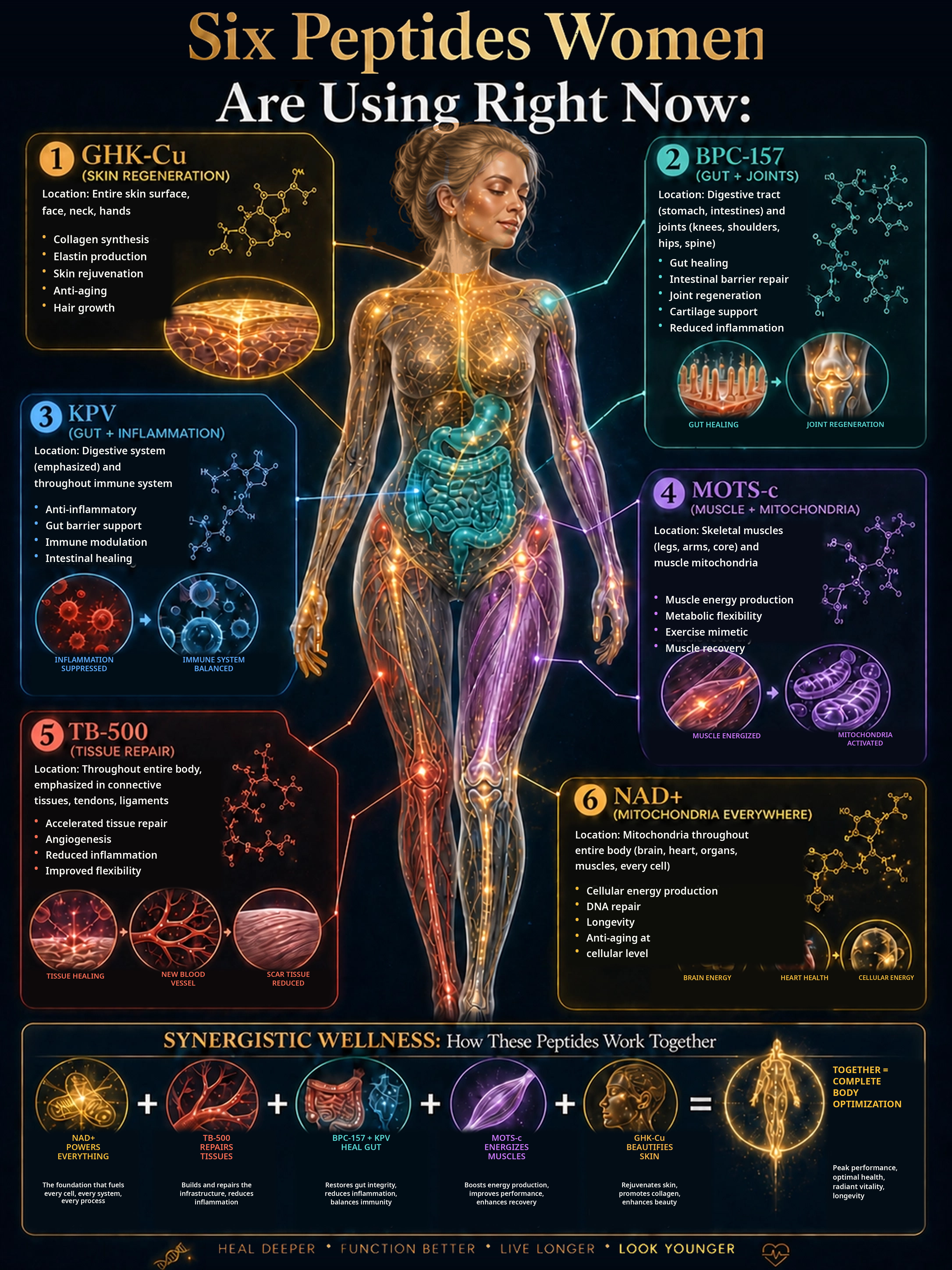
There are dozens of therapeutic peptides — we'll add more as the science settles and as you ask for them.
Semax — Enhances BDNF (brain-derived neurotrophic factor), sharpens focus, improves memory and concentration. Administered as a nasal spray. One of the most popular cognitive peptides for women.
Selank — Anxiolytic peptide that reduces anxiety and stress without sedation. Supports mood stability and emotional resilience. Often paired with Semax for a complete brain protocol.
Dihexa — Extremely potent nootropic that amplifies BDNF signaling. Supports synaptic connections and long-term cognitive function. Used for brain fog, memory and early cognitive decline.
Epithalon — Pineal gland peptide that regulates circadian rhythm and supports sleep quality. Also studied for neuroprotection and anti-aging at the cellular level. Taken in cycles.
Cerebrolysin — Neuroprotective peptide that supports brain repair and regeneration. Used clinically for cognitive decline and neurological conditions. Given by injection.
DSIP (Delta Sleep-Inducing Peptide) — Promotes deep restorative sleep and supports the brain restoration that happens during sleep. Particularly valuable for women 50+ with disrupted sleep architecture.
BPC-157 — While best known for healing and gut health, BPC-157 also has significant brain and mood benefits through the gut-brain axis. Reduces neuroinflammation and supports serotonin and dopamine pathways.
Semaglutide (Ozempic / Wegovy) — GLP-1 receptor agonist. FDA-approved for weight loss. Reduces appetite, slows digestion, improves blood sugar. The most clinically proven peptide for fat loss. Weekly injection.
Tirzepatide (Mounjaro / Zepbound) — Dual GLP-1 and GIP agonist. FDA-approved. Produces greater weight loss than Semaglutide in trials — averaging 20%+ of body weight. Weekly injection.
Retatrutide (Reta) — Triple-action GLP-1/GIP/glucagon receptor agonist. The newest and most powerful weight loss peptide in development. Currently in Phase 3 trials. Showing extraordinary results. Consult your provider.
AOD-9604 — Fragment of human growth hormone that specifically targets fat metabolism without the risks of full HGH. No impact on blood sugar. Supports abdominal fat reduction. Daily injection.
Tesamorelin — Growth hormone releasing hormone analog that significantly reduces visceral (abdominal) fat. FDA-approved for HIV-related lipodystrophy, used off-label for belly fat in women 50+.
MOTS-c — Mitochondrial peptide that mimics the metabolic benefits of exercise at the cellular level. Activates AMPK — the same pathway activated by exercise and Berberine. Especially powerful when combined with morning movement. 3-5x weekly injection.
CJC-1295 + Ipamorelin — Growth hormone secretagogues that restore natural GH levels. Support body composition, fat loss and muscle tone over 3-6 months. Before bed injection on empty stomach.
Fragment 176-191 — The fat-burning fragment of human growth hormone. Targets adipose tissue directly. No effect on blood sugar or insulin resistance. Often stacked with Ipamorelin.
Five Ways In
When I started, nobody handed me a map of how peptides actually get into your body. So here it is. Five delivery methods. What each one does. What to expect.
Which one fits depends on the peptide, your goals, and your protocol — and that's a decision for you and whoever you trust to guide it. A functional medicine doctor, a longevity clinic, a peptide-literate provider, or your own careful research. Most women I talk to are doing some combination of these.
A capsule of one peptide can work beautifully. The same capsule of a different peptide is wasted money — your stomach destroys it before it can do anything. Sublingual might be a fit for one molecule and useless for another. Some peptides only work injected. Others work just as well under the tongue.
Match the method to the molecule. That's the whole game.
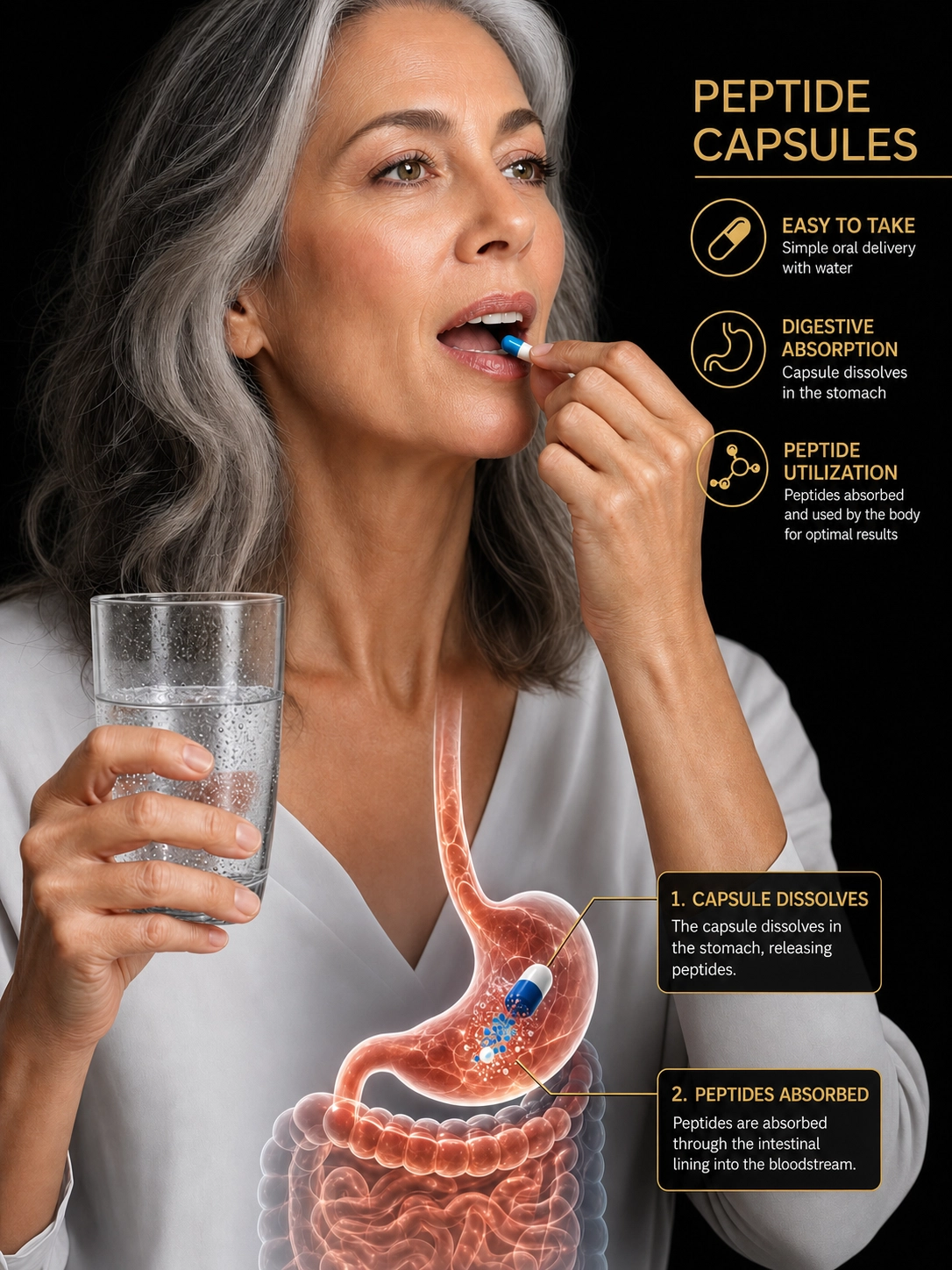
Oral. The easiest entry point. Works for some peptides, wasted on others.
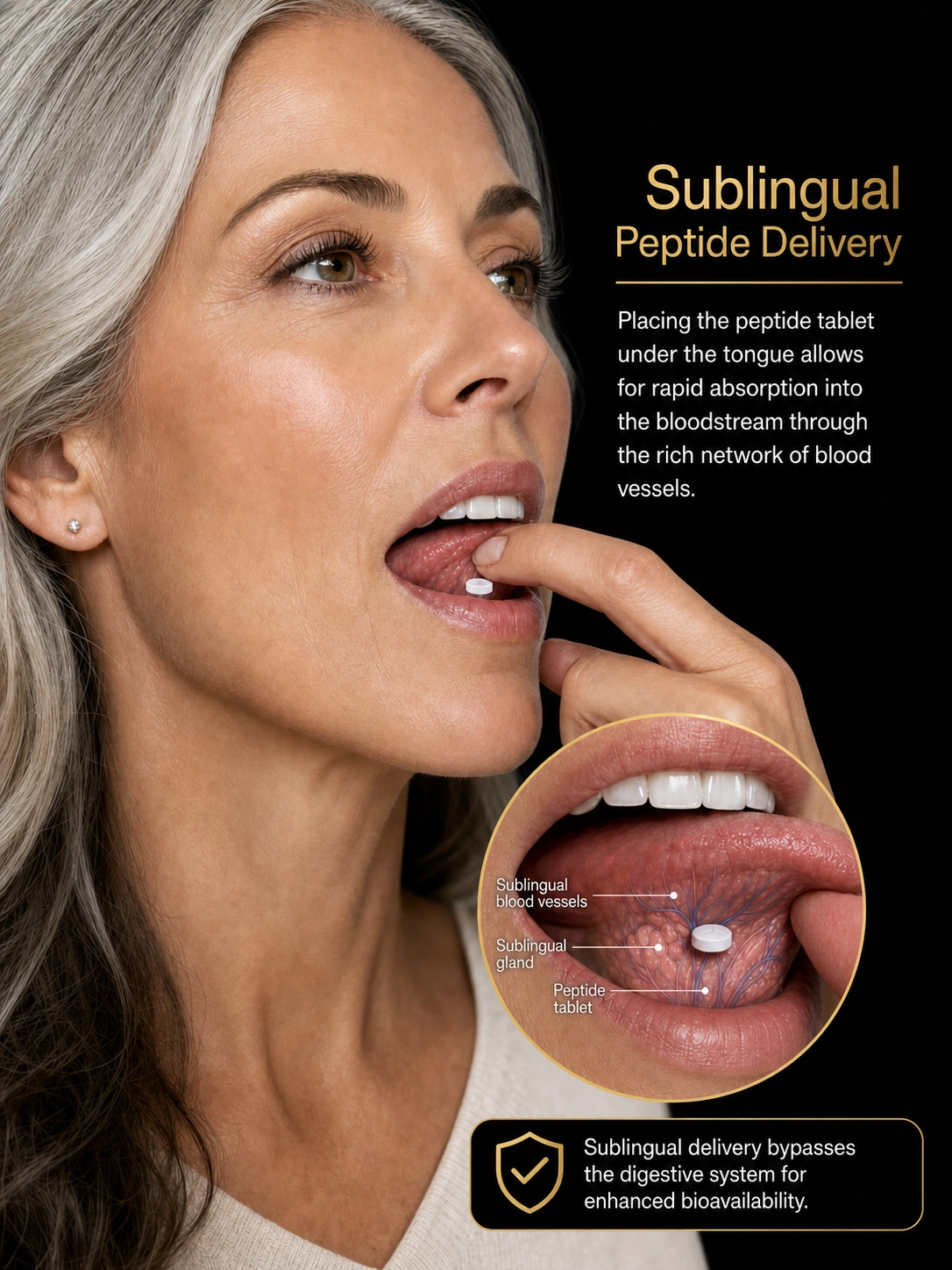
Under the tongue. Faster than capsules, no needle, bypasses digestion entirely.
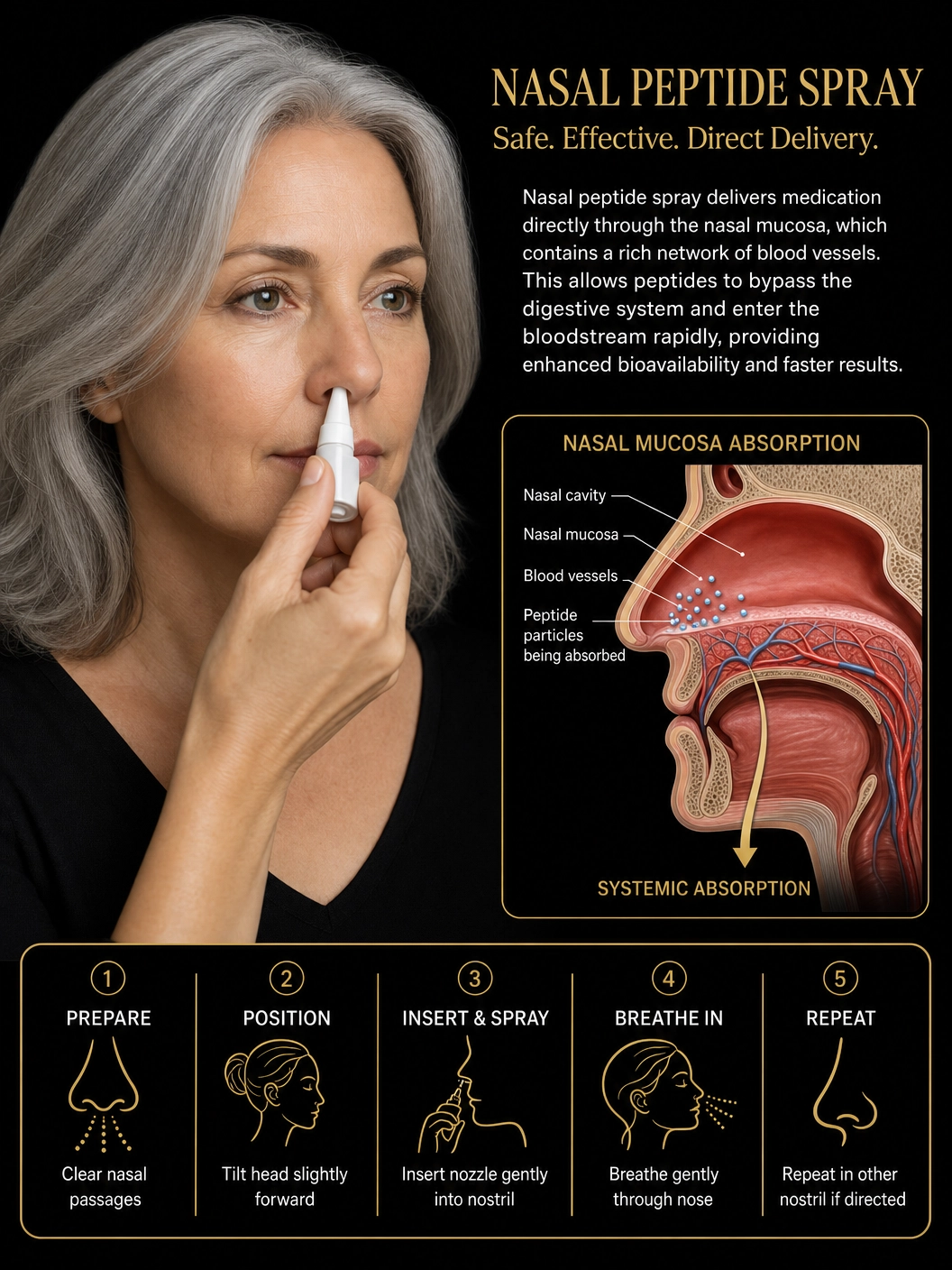
Through the nasal mucosa. Common for brain and mood peptides — Semax, Selank, DSIP.
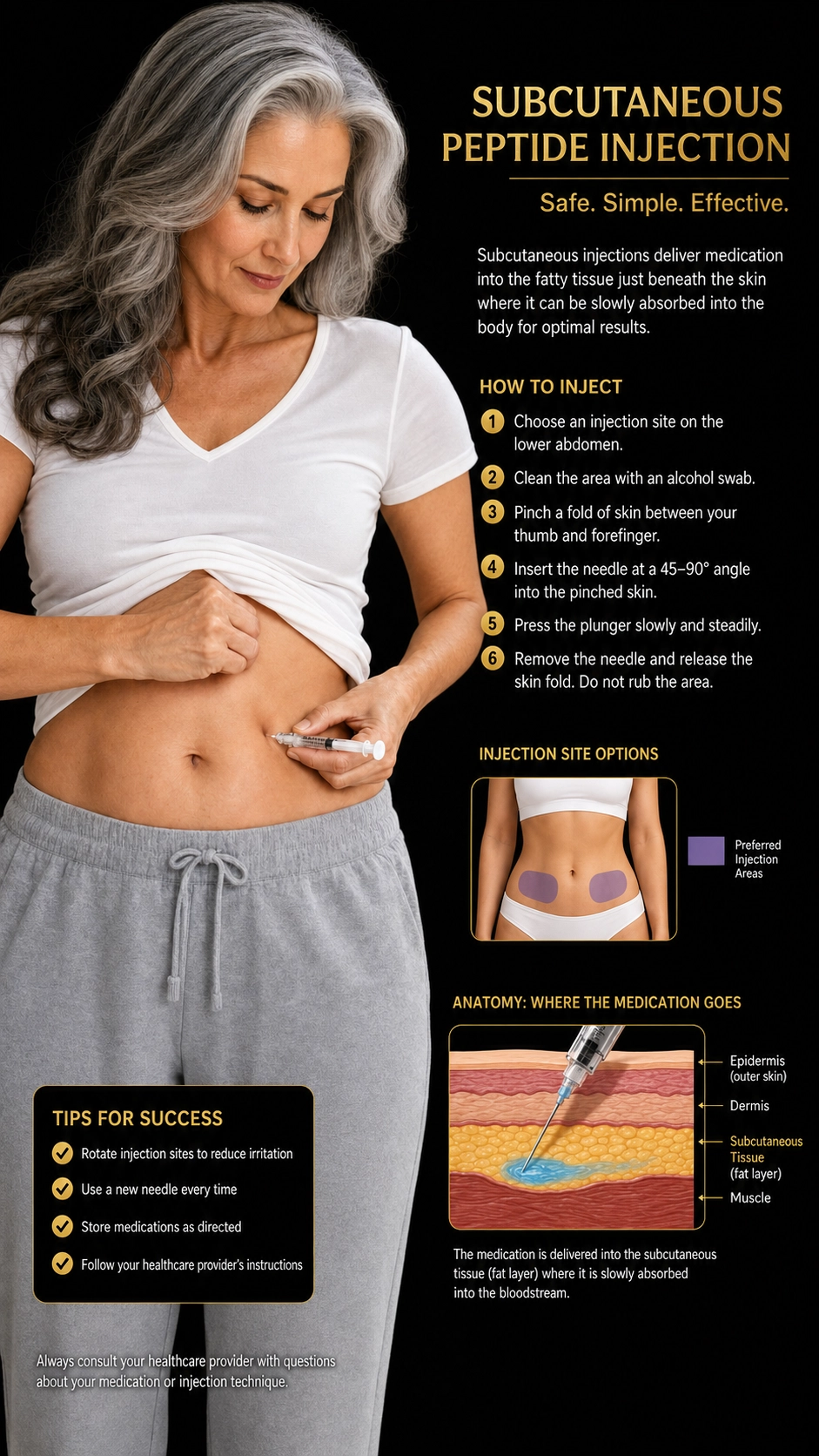
Lower abdomen. The most common method for therapeutic peptides — including semaglutide and tirzepatide.
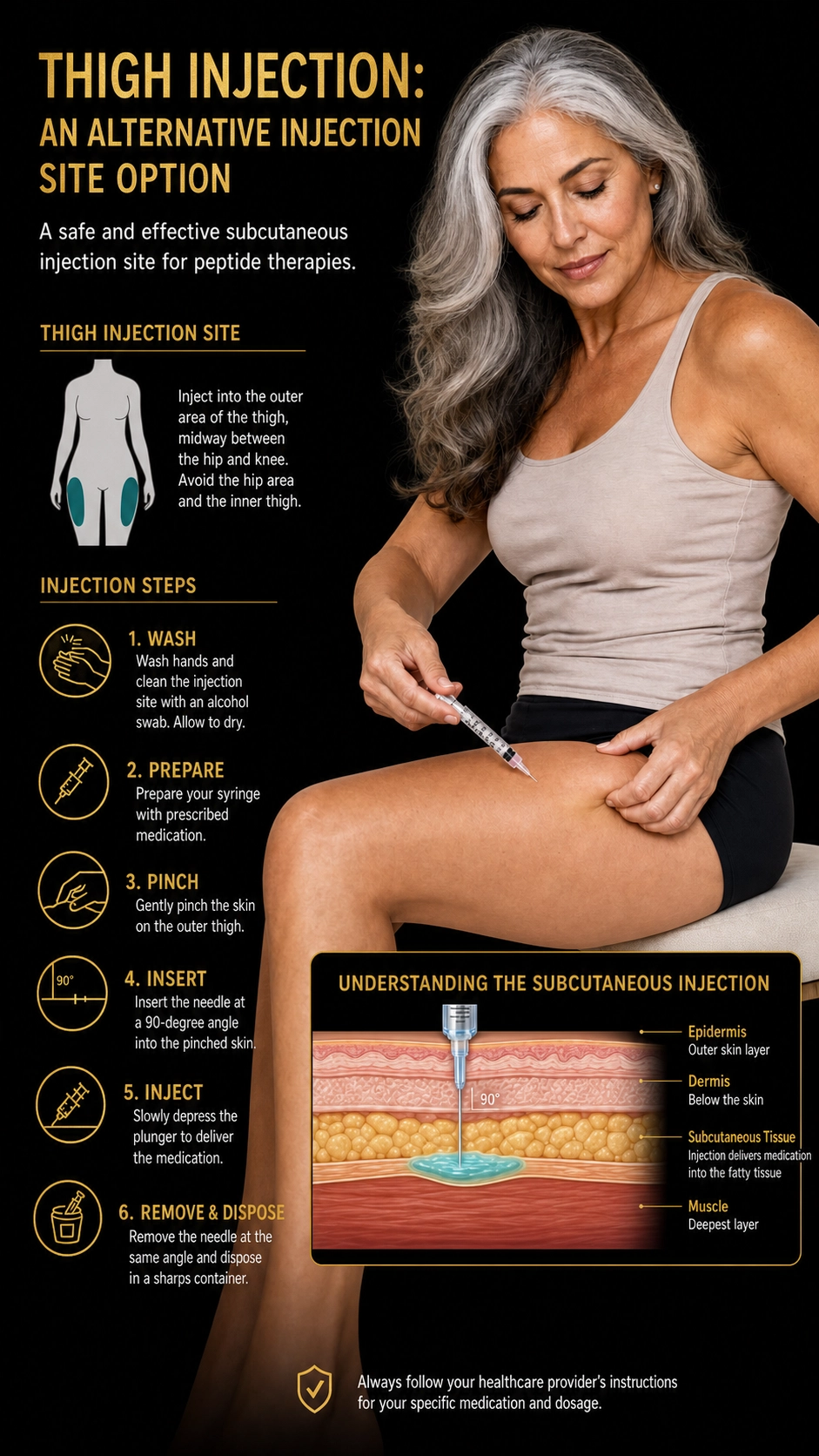
Alternative subcutaneous site. Same method, different real estate. Rotation matters.
If you're going to do this yourself, do it like a grown woman — not a TikTok experiment. Read our Peptide Safety Guide → before you order anything — what to look for in a vendor, how to start, and when to call in a doctor.
Try every tool free for 7 days.
Drop your email and unlock all 12 tools — unlimited use, no credit card, no commitment. The peptide calculator that does the math. The supplement timing that actually matters. The interaction checker that catches what your pharmacy missed.
No spam · No hard sells · Cancel anytime